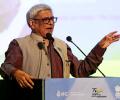
Debroy's economic interests and research work covered numerous areas such as economic theory, income inequality, and infrastructure financing.
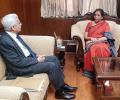
This demand comes at a time when the government is falling short of its revenue targets due to dwindling tax and low disinvestment receipts. It could account for the dividend in the upcoming Union Budget on February 1. RBI is, however, yet to take a final call on the government's demand and might decide on this at its central board meeting scheduled for February 15 in New Delhi.

Replying to supplementaries during Question Hour in Rajya Sabha, he said he could not announce 'many radical" measures in the Interim Budget presented earlier this week because of constitutional constraints. Fiscal correction and monetary changes should go side by side so that impact on the economy is maximum, he said adding, his ministry was in consultation with the Reserve Bank of India for future course of action.

It also saw the suspension of 100 members in a span of four days for unruly conduct and a major security breach on the anniversary of the 2001 Parliament terror attack.
As expected, there have been no major announcements in the Interim Budget.

The Opposition accused the government of bringing a populist budget.

SIAM said excise duty must be lowered
The state of the economy did not deteriorate so sharply in the last eight days that the principles behind not announcing changes in tax rates in an Interim Budget had to be set aside. Nor can it be argued that the demand from industry and members of Parliament for some stimulus measures became so irresistible that the finance minister had to announce the tax rate changes in his reply to the Interim Budget debate.
"There is a need to sustain foreign trade, revive foreign investments and generate domestic demand in order to maintain our growth rates," said External Affairs Minister Pranab Mukherjee, who is also holding the finance portfolio. Boosting the economy was also necessary to "uplift multitudes living below the poverty line." Noting that India cannot remain immune to global crisis, he said, "India faces special challenges from the international financial crisis."
Giving a clear indication on unveiling a package in the interim budget to stimulate industrial demand, the government said on Thursday it is not restrained by the Constitution from announcing urgent policy intervention in the run-up to the Lok Sabha elections.

Union Finance Minister Arun Jaitley is set to present the Budget next month.

Actor Poonam Pandey is not being considered as the brand ambassador of the government's national campaign to spread awareness on cervical cancer, Union health ministry officials said on Wednesday.
Export growth rate in first nine months of 2008-09 touched 17.1 per cent whereas the country's industrial production fell by 2 per cent in December, said Union Foreign Minister Pranab Mukherjee, who is holding additional charge of the finance portfolio, while presenting the Interim Budget for 2009-10 on Monday in parliament.

In this year's budget, Finance Minister Nirmala Sitharaman hiked tax on petrol and diesel, raised import duty on gold, levied additional surcharge on super rich and brought a tax on high value cash withdrawals as she sought to spur growth with reduction in corporate tax and sops to housing sector, startups and electric vehicles.
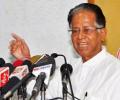
The main Opposition parties in Assam -- Asom Gana Parishad, Bharatiya Janata Party and All India United Democratic Front -- have come down heavily on the Congress government in Assam for presenting an 'election-oriented populist' interim budget for the year 2014-15.
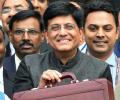
Here are the key highlights of the Interim Budget 2019-20 presented by Finance Minister Piyush Goyal in the Lok Sabha on Friday.
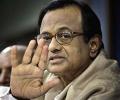
Finance Minister P Chidambaram on Monday made a veiled attack on Narendra Modi and Arvind Kejriwal, telling them "neither populism nor individualism" is an alternative way of governance and expressed confidence that people will entrust responsibility to a "hand" that works for equity.

She posed for the traditional 'briefcase' picture outside her office along with her team of officials before heading to meet the President. She, however, was holding a tablet instead of a briefcase to present the Budget in a digital format.

The government has budgeted to cut the fiscal deficit to 3.3 per cent of GDP or Rs 6.24 lakh crore in 2018-19, from 3.53 per cent in the previous financial year.

Prices of automobiles, including cars, sports utility vehicles and two-wheelers, are set to come down with Finance Minister P Chidambaram announcing a reduction in excise duty in the Interim Budget.
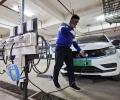
Even as the government debates whether to continue the FAME-II subsidy for electric vehicles (EVs), the share of such vehicles in overall sales is decelerating, after witnessing a heady growth in the first few years. The penetration of EVs - electric two-wheelers, passenger vehicles, three- wheelers and other segments collectively - in the first 10 months of FY24 has been pegged at 4.3 per cent, compared to 3.7 per cent in FY23, according to credit rating agency ICRA.

Elections are not won or lost by expounding on such macro-economic matters. For the aam admi, what matters in manifestos are promises that will improve their quality of life, notes Vinayak Chatterjee.
The biggest focus area turned out to be 'investment'.

India will replace its military personnel operating three aviation platforms in the Maldives with 'competent' Indian technical personnel even as New Delhi asserted that it remained an important development partner of the island nation.

'Rather than taking a very short-term view on the markets, equity investing should be premised on longer term growth opportunities.'

The highest collection target has been given to Mumbai at Rs 4.39 trillion, followed by Delhi and Bengaluru.
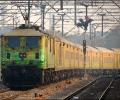
After presenting his first railway budget, Mallikarjun Kharge on Wednesday said he was not for populism but wanted to be "realistic" to ensure that the national transporter thrives for the people of the country.
Student loans increased from Rs 4,500 crore (Rs 45 billion) on March 31, 2004 to Rs 24,260 crore (Rs 242.6 billion) as on September 30, 2008, the minister said.

A day ahead of the interim Budget, India slashed import duty on spare parts, like battery cover, lens and SIM socket, used in mobile phone manufacturing to 10 per cent, from 15 per cent. The duty cut is aimed at boosting local production and exports, as well as reducing prices in local markets. The finance ministry on January 30, notified the cut in duty on all goods for use in manufacture of cellular mobile phones to 10 per cent.

Excise exemptions may be whittled in Budget to offset higher govt salaries, pensions

India, desperate to trim a gaping current account deficit, took a slew of measures last year to curb demand for bullion
In yet another round of sops, Finance Minister Jaswant Singh on Wednesday said the exemption on dividend distribution tax to open-ended equity-oriented scheme of mutual funds should continue for full year beyond March 2004.

BMW Group India recorded its highest annual sales on the back of strong demand for its top-end ICE (internal combustion engine) and electric vehicles (EVs). The German luxury automaker on Thursday announced that its domestic car sales jumped 18 per cent year-on-year (Y-o-Y) to 14,172 units in calendar year 2023 (CY23). This mirrored a trend in the luxury space, with its peers also reporting record numbers.
Last week, Power Secretary Pradeep Kumar Sinha said that the government is confident of adding 1,18,000 MW capacity by 2017.

China on Wednesday announced a 12.2 per cent increase in its defence budget taking the military spending for this year to $132 billion, far above India's $36 billion.

No government in the past initiated the process of policy making for its next tenure even before going in for elections. Once the Model Code of Conduct is enforced by the Election Commission, should the government of the day refrain from taking an active interest in policy making for the next five years and let that be the function of the new government?, asks A K Bhattacharya.

The interim finance minister said the Insolvency and Bankruptcy Code was helping in recovery of non-performing loans.
While MSI's price cuts range between Rs 8,502 and Rs 30,984 across its models, Hyundai has slashed prices by between Rs 10,000 and Rs 135,300.
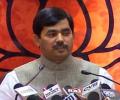
Hussain said the new government had inherited an "empty treasury" while the prices of oil were shooting up.
